
I was crouched beneath a kitchen sink late one evening, a flashlight propped against the cabinet wall, when I noticed how the copper fittings caught the light, each one glinting like a small, determined star in the dark.
That moment stayed with me, because what I was about to do was solder those joints cleanly and correctly to determine whether that pipe held for a decade or dripped by morning.
If you’ve found yourself staring at a leaking joint, planning a bathroom renovation, or installing new supply lines for the first time, I want you to know that learning how to solder copper pipe is one of the most valuable and genuinely satisfying plumbing skills you can develop.
I’ve been through the mistakes, the overheated fittings, and the failed joints and I’m going to help you skip all of that and get it right from the very first connection.
What to Know Before Soldering Copper Pipe
Before I heat a single fitting, I always make sure these fundamentals are locked in and I want you to treat each one as a rule, not a suggestion:
- Full pipe preparation is the most critical phase poor prep is the leading cause of leaky joints, not technique; I’ve seen this proven over and over
- Use lead-free solder (95/5) for any potable water lines; reserve 50/50 solder for non-potable drain work only
- Fire safety must come first, especially in tight or enclosed spaces keep a fire extinguisher nearby at all times and I always keep one within arm’s reach
- The pipe and fitting must both be cleaned to bright, shiny bare copper before any flux is applied I never skip this step, and neither should you
- Apply only a thin, even coat of flux too much causes drips, corrosion, and messy joints that lead to rework
- Never rush cooling let every joint cool naturally; shock-cooling causes stress cracks and weak seals that fail under pressure
Preparation, safety, and correct heat application are the three pillars of knowing how to solder copper pipe successfully. Clean metal plus complete flux coverage equals a strong, leak-free joint every single time. Cutting corners at the prep stage costs you far more time in repairs than doing it properly from the start.
Essential Tools for Soldering Copper Pipe
I learned early that the right tools make this job dramatically easier and safer. Here’s everything to gather before lighting the torch:
- Propane or MAP gas torch with igniter MAP gas burns hotter and works faster on larger fittings; propane is reliable and widely available for standard residential work on ½” and ¾” pipe sizes
- Tube cutter produces a clean, perfectly square cut every time; a crooked cut leads to a weak, misaligned joint that no amount of solder will fix reliably
- Deburring tool or reamer removes the inside lip left by the tube cutter; burrs inside the pipe trap debris, restrict water flow, and interfere with a clean solder draw into the joint gap
- Emery cloth, sand cloth, or abrasive mesh used to clean the outside of the pipe to bright bare copper; oxidation left on the surface causes solder to fail completely even with perfect flux application
- Fitting wire brush sized to the pipe cleans the interior of fittings to shiny bare copper; I match the brush size exactly to the fitting diameter for full contact and complete coverage on every pass
- Lead-free flux and flux brush flux prevents re-oxidation during heating and draws solder into the joint; apply a thin, even coat with the brush to both mating surfaces before assembly
- Lead-free solder (95/5) the correct and legally required choice for all potable water supply lines; always confirm lead-free on the label before starting any drinking water work
- Flame shield or heat protection pad essential for protecting nearby wood framing, drywall, and insulation from torch heat; in tight spaces this is non-negotiable safety equipment
- Clean cotton rags used while the joint is still hot but not molten to wipe away flux residue, solder drips, and surface beads; wiping hot prevents future corrosion on the pipe exterior
Understanding the Copper Pipe Soldering Process
I think the reason so many first-timers struggle with this skill is that they focus on the solder itself rather than the heat and the surface beneath it. The fundamental principle of how to solder copper pipe is that you heat the fitting, not the solder.
When the copper fitting reaches the correct temperature, the solder melts the instant it touches it and gets pulled deep into the gap between pipe and fitting through capillary action not gravity, not force, but the natural physics of molten metal being drawn into a tight, clean space.
This is why preparation matters so completely: if any oxidation, moisture, or debris remains on either surface, capillary action fails. The solder sits on top of the joint rather than flowing into it, and you end up with a connection that looks sealed but will fail under pressure. I’ve seen this happen more times than I can count, and every time it comes back to preparation. Understanding this process changes everything about how you approach the work.
Simple Method to Solder Copper Pipe Properly
When I walk you through how to solder copper pipe for the first time, I always make sure you understand the complete logical flow before you ever light the torch. You begin with a clean cut, deburr the inside edge, clean both the pipe exterior and the fitting interior to bare shining copper, apply a thin and even coat of flux to both mating surfaces, and then fully insert the pipe into the fitting with a slight twist to distribute the flux evenly around the full contact surface.
Never disturb the assembly after this point. I want you to position your flame shield next, check that all flammable materials are protected, and get yourself into a comfortable and stable stance especially in tight spaces where a shaking hand causes overheating and missed solder flow. Once you have everything in place, you’re ready to apply controlled, deliberate heat and let the joint do exactly what it’s designed to do.
Preparing Copper Pipe for Soldering
I cut my pipe with a tube cutter, rotating steadily until the cut is clean and perfectly square. Then I ream out the inside lip with a deburring tool to remove any restriction to water flow.
After that I clean the outside of the pipe with emery cloth and the inside of the fitting with a correctly sized wire brush both until they shine like bright new copper.
Even a faint layer of oxidation is enough to cause solder to fail, so I clean thoroughly every single time without exception, and I want you to do the same.
Heating and Applying Solder Correctly
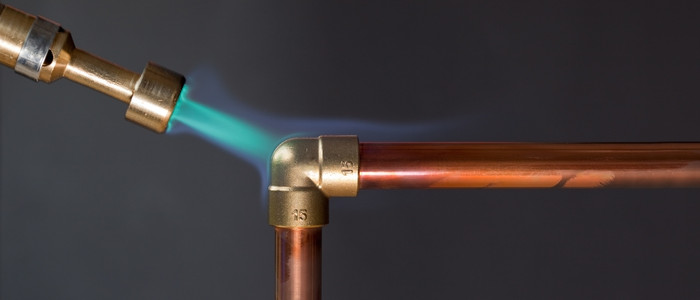
I aim the torch flame at the fitting side of the joint, using the tip of the flame where the heat is most concentrated. I start heating from the bottom of the joint and work upward this helps the solder flow evenly through the full circumference.
Once the fitting is hot enough, I touch the solder to the joint gap opposite the flame. It melts immediately, gets pulled inside by capillary action, and forms a clean, thin silver ring that tells you the joint is sealed. More solder does not mean a better seal, only enough to fully fill the joint is needed, and once you see that ring, you stop.
Common Techniques Used for Copper Pipe Soldering
Different situations call for refined approaches. These are the techniques I rely on most consistently:
- Bottom-up heating method always start the torch at the bottom of the fitting and move upward; this ensures even heat distribution and pulls solder through the full joint circumference rather than pooling at one side
- Opposite-side solder feeding touch the solder to the joint at the point directly opposite the flame; the heat draws it through the gap by capillary action for complete internal coverage no other method achieves
- Joint order planning in multi-connection runs solder horizontal joints first and leave vertical fittings for last; this prevents previously soldered joints from reheating, which causes the solder to run out due to gravity and leave gaps
- Fitting brush rotation technique when cleaning fitting interiors, rotate the brush with firm pressure through several full turns; a few half-hearted passes leave oxidation on the upper interior where it cannot be seen but absolutely matters
- Thin flux application with a brush never glob flux on with a finger; use a small brush for even, controlled coverage of both the pipe exterior and the fitting interior before assembling the joint
- Compact torch positioning in tight spaces get the body stable and comfortable before lighting, even lying flat if necessary; a steady hand prevents overheating, missed solder flow, and accidental fire contact with nearby materials
- Right-angle mirror inspection use a small inspection mirror to check the back side of joints in confined areas; I look for a complete, even solder ring with no pinholes, gaps, or burnt flux residue
- Dry rag wipe while still hot after the solder solidifies but while the joint is still warm, wipe firmly with a clean cotton rag to remove all flux residue; leftover flux corrodes copper from the outside in over time
Errors to Avoid While Soldering Copper Pipe
I’ve made most of these mistakes myself at some point, and every one of them taught me something important. The single most damaging error is skipping or rushing the cleaning and flux steps.
Dirty copper simply will not produce a sealed joint no matter how perfect the torch technique is. Overheating small fittings is the second most common problem I see; ½” and ¾” fittings heat extremely fast, and burnt flux stops solder from flowing at all.
- Skipping pipe cleaning or using partially oxidized copper without re-cleaning
- Applying too much flux, which causes drips, runs, and long-term corrosion on the pipe exterior
- Heating the solder directly instead of the fitting this produces a cold, unreliable joint that looks finished but isn’t
- Using too much solder in the belief that more creates a stronger, more reliable connection
- Disturbing or moving the joint before the solder has fully solidified and cooled naturally
- Soldering over damp or wet copper moisture turns to steam and blows pinholes straight through your joint
- Ignoring fire safety in tight wall cavities and under-cabinet spaces where I always use a flame shield
- Failing to deburr the pipe interior, which restricts water flow and traps debris right at the joint connection
Quick Steps to Solder Copper Pipe Smoothly
- Cut pipe square with a tube cutter
- Ream and deburr the inside edge thoroughly
- Clean pipe exterior with emery cloth to bare copper
- Clean fitting interior with correctly sized wire brush
- Apply thin flux coat to both mating surfaces
- Insert pipe fully into fitting and twist slightly
- Position flame shield and protect nearby materials
- Heat fitting from bottom upward with torch tip
- Feed solder opposite the flame until ring forms
- Wipe joint clean with dry rag while still warm
Extra advice for clean and durable soldered joints: I always let every finished joint cool completely at its own pace before pressurizing the line natural cooling allows the solder to contract and seat evenly inside the joint gap.
I also label my solder clearly so I never confuse lead-free with standard solder, especially when you’re working across different sections of the same plumbing system on the same day.
Copper Pipe Soldering Tools and Their Uses
| Tool | Primary Use | Key Tip |
| Propane or MAP gas torch | Heats the copper fitting to soldering temperature | Use MAP gas for faster heating on larger fittings; keep flame tip at the fitting, never the pipe body |
| Tube cutter | Cuts copper pipe cleanly and squarely | Rotate slowly with steady pressure; a crooked cut creates a weak joint no flux will fix |
| Deburring tool or reamer | Removes the inside burr left by the tube cutter | Always ream every cut; burrs restrict water flow and prevent a clean capillary solder draw |
| Emery cloth or abrasive mesh | Cleans the outside of the pipe to bare shiny copper | Clean until visibly bright; dull copper means oxidation remains and solder will not bond |
| Fitting wire brush | Cleans the interior of fittings to bare copper | Match brush size exactly to fitting diameter for complete contact coverage on every turn |
| Flux and flux brush | Prevents re-oxidation and draws solder into the joint gap | Apply thin and even only; excess flux drips, burns dark, and corrodes the pipe over time |
| Lead-free solder 95/5 | Fills the joint gap through capillary action | Use only enough to form a thin silver ring; more solder will not improve the seal quality |
| Flame shield or heat pad | Protects nearby wood, drywall, and insulation from torch | Always use in wall cavities, under cabinets, and any tight space with flammable materials |
How to Check Copper Pipe After Soldering
I never assume a joint is sealed just because the soldering process feels smooth. I inspect and test every single connection before I close up a wall or restore water pressure, and I want you to develop the same habit without exception.
A completed joint should show a full, even silver ring of solder visible around the entire circumference of the fitting with no gaps, pinholes, or dark burnt areas. I use a right-angle inspection mirror to check the back side of joints in tight or enclosed spaces where direct line of sight is impossible. I look carefully for unsoldered sections and burnt flux residue, which appears as dark, crusted discoloration around the joint.
Once the visual inspection passes, I pressurize the line slowly with water or air and watch every joint carefully for any sign of seepage. If I see a drip, I mark it, drain the line, and re-solder before closing anything up. A joint that clears both visual inspection and a pressure test is one you can confidently close inside the wall.
Helpful Tips for Better Copper Pipe Soldering
I’ve gathered these from years of hands-on work, and I recommend applying every one from your very first joint:
- Keep your tube cutter blade fresh a worn wheel crushes rather than cuts, leaving a distorted pipe end that won’t seat properly inside the fitting and creates a weak joint
- Dry the pipe completely before soldering even a small amount of residual moisture turns to steam under torch heat and blows pinholes straight through the joint from the inside
- Flux both surfaces immediately before assembly don’t clean, walk away, and flux later; oxidation begins returning to bare copper within minutes of cleaning and ruins the prep work
- Use the tip of the flame, not the base the outer cone tip is the hottest part of a torch flame and heats the fitting most efficiently without scorching surrounding surfaces
- Solder vertical joints last in any multi-fitting assembly gravity causes solder to run out of a reheated vertical joint during your subsequent work and leaves an incomplete seal
- Keep a fire watch for 15–30 minutes after finishing in any enclosed or confined space embers in wall insulation or wood framing can smolder completely undetected before catching
- Test with air pressure before water if you’ve done extensive work air reveals leaks immediately and won’t flood the space if a joint has failed before it’s discovered
- Store your flux sealed and away from heat degraded or contaminated flux won’t coat properly and produces inconsistent, unreliable joints even when everything else is done right
FAQ
What tools are needed to solder copper?
For soldering copper, you’ll need a soldering iron or torch, solder (usually lead-free or silver), flux to help the solder flow, wire brush or sandpaper to clean the copper, and heat-resistant gloves for safety. Optional tools include pipe cutters and plumbing clamps for precise work.
What material do you use to solder copper pipe?
95/5 Solder (Tin/Antimony): Made of 95% tin and 5% antimony, this lead-free solder has a higher melting range of 450°F to 464°F and is often used for copper and brass pipes in drinking water systems.
Can you solder copper pipe with water in the line?
No, copper pipes must be drained and dry before soldering; water in the line prevents proper heating and solder flow.
How do you prepare copper pipe for soldering?
To prepare copper pipe for soldering, clean the pipe and fitting with a wire brush or sandpaper, then apply flux to ensure the solder bonds properly.
Can I solder a brass valve to copper pipe?
Yes, you can solder a brass valve to copper pipe using a suitable lead-free solder and flux, ensuring both surfaces are clean and properly heated.
Conclusion
I want you to walk away from this guide feeling genuinely capable and ready. Knowing how to solder copper pipe is one of those skills that pays you back every time you use it in saved repair costs, in the satisfaction of a job done correctly, and in the quiet confidence of knowing the joints you made will hold strong for years without issue.
The entire process rests on three non-negotiable foundations: clean shiny copper on every mating surface, a thin even coat of flux applied to every piece before assembly, and controlled heat directed at the fitting never at the solder itself.
We’ve walked through the essential tools, the correct technique for tight and confined spaces, the joint order that protects your earlier work from reheating, and the inspection steps that confirm every single connection is properly sealed before you close up the wall.
Every mistake I’ve described is one I’ve made myself and learned from through experience, and every tip I’ve shared has made a real, measurable difference to the quality of my finished work over the years.
You have everything you need right here: the method, the tools list, the safety steps, and the common errors to sidestep completely before you even light the torch. So now that you understand exactly how to approach this skill from preparation all the way through pressure testing and final inspection, what’s the first copper joint you’re finally ready to tackle on your own?